What is rare in rare? #8 Krikos Zois
Rare diseases are characterized by their low prevalence, defined as affecting fewer than 5 individuals per 10,000 people in the EU. Over 80% of these conditions are genetic, with initial symptoms often appearing during childhood. This early onset significantly impacts both patients and families, as early intervention can be crucial for managing symptoms and improving quality of life.
However, statistics only provide a partial view of the situation. The real challenge lies in obtaining timely diagnoses, ensuring equitable access to care, and establishing a healthcare system prepared to recognise and manage these complex conditions. This includes training healthcare professionals, increasing awareness, and ensuring that patients have access to multidisciplinary teams that can provide the comprehensive care these conditions often require.
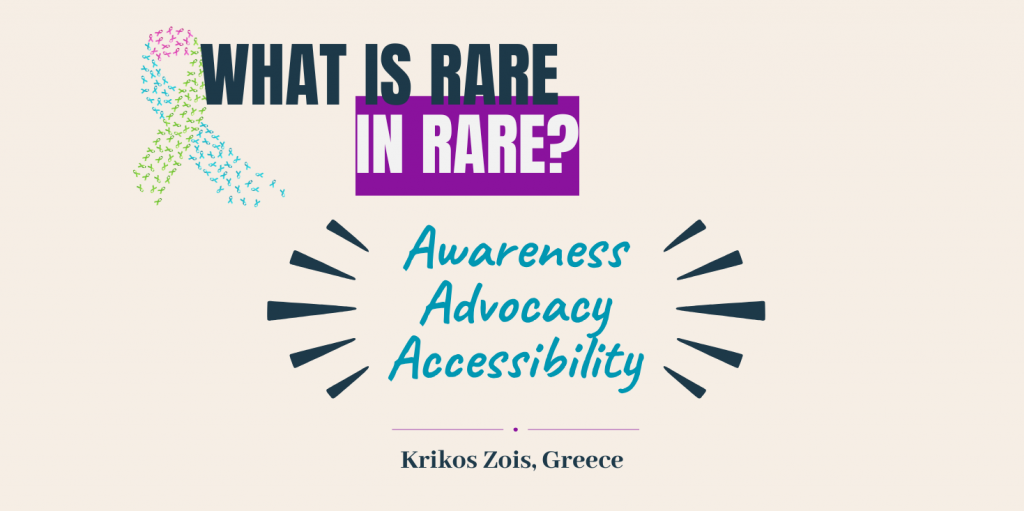
Our partner patient association KRIKOS ZOIS chose three meaningful words to answer the question “What is rare in rare?”: Awareness. Advocacy. Accessibility.
Lack of awareness – even among healthcare professionals – remains a major barrier for rare diseases. Delayed recognition of symptoms can lead to delayed diagnoses, missed opportunities for prevention, and delays in life-changing treatments. Greater understanding also fosters empathy, helping to reduce the sense of isolation many people living with rare diseases experience due to limited public knowledge of their conditions.
Advocacy, especially self-advocacy, is essential. Empowering individuals to speak up for their needs helps ensure proper recognition and care. Advocacy also drives equity, promoting fair attention and management compared to more common diseases.
Accessibility to accurate diagnosis, specialised care, and appropriate treatment is still challenging. Patients may also struggle to find others living with the same condition. Building connection within the rare community helps reduce isolation and strengthens resilience.
Despite the many challenges, people living with rare diseases often describe a powerful sense of uniqueness. Overcoming obstacles – sometimes because of the very difficulties they face – builds strength, patience, and empowerment.