What is rare in rare? #7 AFG – Francophone Glycogenoses Association
There are more than 6000 identified rare diseases worldwide. Although each condition affects a small number of people, together they impact over 300 million individuals globally. Rare diseases are incredibly diverse, differing widely in causes, symptoms, severity, and progression.
Among them, Inherited Metabolic Disorders (IMDs) comprise a group of more than 1400 rare genetic conditions, classified into over 130 different biochemical categories. They affect both children and adults and are highly heterogeneous. Most of them are chronic and often progressive, potentially involving multiple organs.
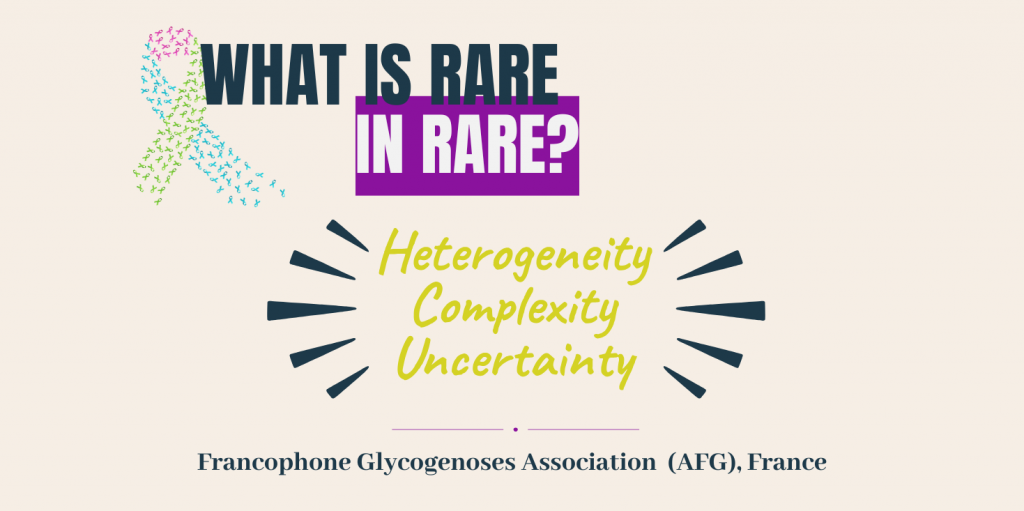
The three words shared by our partner patient organisation Association Francophone des Glycogénoses, in response to the question “What is rare in rare?” mirror three peculiar features of these conditions.
Heterogeneity highlights the wide variability seen across rare diseases, and especially within inherited metabolic disorders. Symptoms, severity, and disease progression can differ greatly from one disorder to another, and also among individuals living with the same diagnosis.
Complexity reflects the multifaceted nature of these conditions. From diagnosis to care pathways, rare diseases often require multidisciplinary approaches, specialised expertise, and continuous adaptation to evolving needs.
Uncertainty remains a daily reality for many patients and families. Delayed diagnoses, unclear prognoses, and limited research can make the future feel unpredictable.